

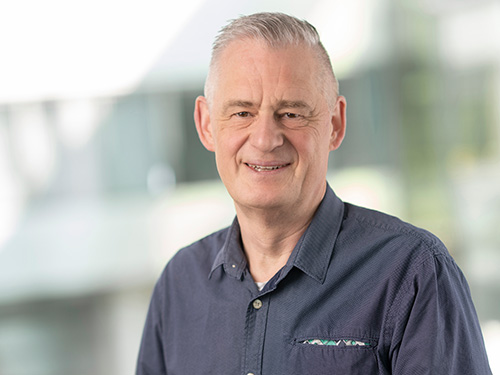
Prof. Andreas Hartwig
Deputy Director, Chief Scientist, Fraunhofer IFAM
Andreas is polymer chemist and works since 1992 at Fraunhofer IFAM in the field of adhesives chemistry. He is deputy director of Fraunhofer IFAM in Bremen and Chief Scientist. In addition he teaches polymer chemistry at Bremen University.
Polyurethane Based Adhesives – No Isocyanate but Carbon Dioxide as Feedstock
The use of isocyanates becomes continuously restricted. In addition the use of alternative feedstock is required preferably compounds which are available without restriction. Carbon dioxide is such a compound. Due to its chemical inertness it is difficult to be integrated into adhesive polymers. Alternatively it could be reduced to compounds like methanol, but this requires a high energy consumption. Fortunately, we developed a catalytic system which allows addition of carbon dioxide onto epoxides at ambient pressure and moderate temperatures. This reaction leads to cyclic carbonates and can be carried out in common stirring reactors instead of high pressure autoclaces usually required for reactions with carbon dioxide. Cyclic carbonates can be cured with amines forming hydroxypolyurethanes. The reaction rate can be adjusted by catalysts and are similar to the common addition of isocyanates and alcohols. Unfortunately, these polyurethanes have a higher affinity to moisture compared to common ones. This can be overcome by formulation, e.g. hydrophobic additives and coreactants with higher hydrocarbon content. It is possible to use biobased raw materials for these reactions. E.g. a model adhesive could be designed in which all carbon is biobased or is from carbon dioxide. With this adhesive a lap-shear-strength of 20 MPa could be obtained on steel and it bonds numerous other materials well.
Breakout Session X – Sustainable PU Systems: From Raw Materials to Reactivity – 17 September 2026 – 16:30 – 17:00 – Room Whittle – F3